
In product photography, lighting is the most important element.
It defines shapes, reveals textures, and gives images their professional look.
In this simple guide, we explain the fundamentals of packshot lighting, common mistakes to avoid, and why proper lighting makes all the difference for e-commerce visuals.

Why lighting matters in packshot photography
The goal of a packshot is to present a product in a clear, accurate, and attractive way.
Poor lighting can cause:
-
harsh shadows
-
distracting reflections
-
inaccurate colors
-
loss of detail
Well-controlled lighting helps:
-
improve product readability
-
ensure visual consistency across a catalog
-
enhance perceived quality
-
increase conversion rates
The basics of packshot lighting
Soft and even lighting
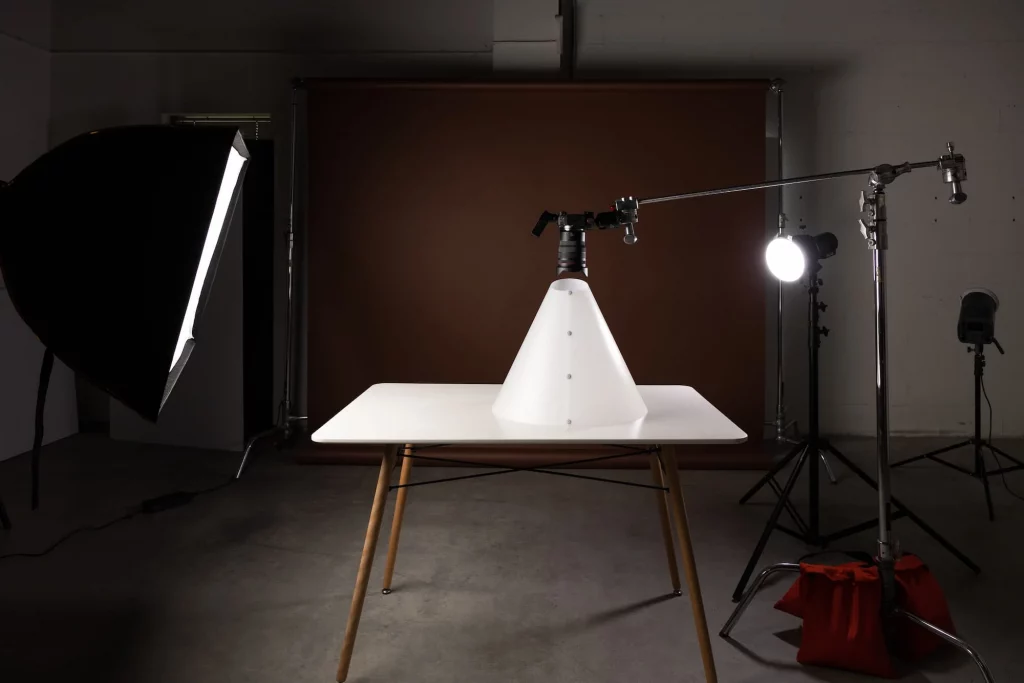
Packshot photography relies on diffused light.
The aim is to avoid harsh contrasts and achieve a clean, balanced result.
Softboxes, diffusers, and reflectors help spread light evenly around the product.
The key light
The key light defines the structure of the product.
It shapes volume and determines the direction of light.
It is usually placed slightly above and to the side of the product, with controlled intensity.

The fill light
The fill light softens the shadows created by the key light.
It balances the image without flattening it completely.
Lighting the background properly
The background should be lit separately from the product.
A poorly lit white background may appear gray or uneven.
Proper lighting ensures a clean, uniform white background without overexposure.
Adjusting lighting based on product type
Shiny products (bottles, glass, metal)
Reflective surfaces require precise control.
Large diffused light sources help create clean, controlled highlights.

Textile products
Lighting should reveal fabric texture and shape without emphasizing unwanted wrinkles.

Standard e-commerce products
Consistency is key.
All products should be photographed with the same lighting setup to maintain brand coherence.


Common lighting mistakes
-
using a single light source
-
lighting that is too harsh
-
poorly lit backgrounds
-
mixed color temperatures
-
relying only on natural light
Why work with a professional packshot studio
Professional lighting requires:
-
specialized equipment
-
experience
-
time to fine-tune each setup
A packshot studio ensures images that are consistent, clean, and ready for all digital platforms.
Conclusion
Lighting is the foundation of a successful packshot.
It’s not just about illuminating a product, but about presenting it with precision and consistency.
For professional, high-quality visuals, working with a specialized studio remains the most effective solution.